
My New Writing Routine
Affording a Lifestyle. #Versicoloured 1

Hello to your alma,
I’m desperate to talk about routine here because it’s been my new obsession since leaving London and moving to the coast. My wish is to write every other month on new habits and things I’m doing to nourish my alma (by this point I hope you know alma means soul in Portuguese). And I just realised I’m sending this on a day of Full Moon and Eclipse in Virgo, the astrological sign for habits, routine and discipline.
That’s a beautiful culmination of changes that have started long ago. It’s been years I’ve been changing my routine and daily habits to move slower in my day. I believe a slower pace of life is healthier for the body. In most of the cases in the slowness we can finally hear our alma speak. Living slower for me is also being able to create and write with more presence, purpose, clarity.
But before jumping into my version of a nourishing routine in this new phase I would like to start these series by bringing some consciousness around the idea of romanticising the so called slow lifestyle and daily habits, and how I ended up creating space on my life for the sake of my mental health.
I don’t know when exactly the wake up call to review my concepts on being productive or successful started but for sure reading the book The Burnout Society by philosopher Byung-Chul Han was a portal. Then meeting philosopher Ailton Krenak at Southbank Centre when he was launching the book Life is not Useful. And then loosing my dad and writing a memoir about it (which is currently a working in progress project).
Well, since all of these started happening, roughly around four years ago, I’ve seen more and more content on slow life on the internet. It must be a symptom of our crazy-busy-schedule-minds. A funny one, because making content about slow life on the internet it’s counterintuitive and we all know: the internet is fast, trying to steal our attention every minute, and content creators are constantly under pressure to produce. On top of that, life becomes the product itself, which is exactly what the idea of a slow life advocates against in my opinion.
But that doesn’t annoy me, as we’re humans and must express ourselves, and create, and make things, and connect. A lot of these contents are beautiful, deep, and have touched me, bringing me comfort in times I needed. What I want to discuss here is the idea that many of these promote the belief that living a slow life is a matter of one’s choice. You alone are responsible for taking action toward a more purposeful life.
Although I truly believe in most of contexts humans beings have agency – what historian Roger Chartier defines as room for maneuver – and accountability for one’s actions, it is problematic to assume that our choices are tied to psychological inner traits and that’s all. There are social, cultural, and economic limitations we’re submitted to.
We all come from some type of family, live under some type of government and law, need cash to do this or that (which is tied to a currency), and in between the video on Slow Living as an Artist there will be an advertisement of a new bag or app. Advertisements strongly influence our psyche, desires, and goals. They shape many of our impulses and are not inner traits.
Becoming aware of this does not limit our agency, but helps us don’t loose the larger thread we share in the collective dream.
I believe the concept of slow living derives from the Slow Food movement that Carlo Petrini started in 1986 in response to the rise of fast food in Italy, advocating for the value of local and sustainable foods. Similarly, slow living values the ability to stay in the present moment, slowing our lives down to enjoying the simple pleasures of life.
However, for most modern humans, even if we can choose to eat locally, raise a few chickens and exercise being in the present moment, becoming aware of this choice requires space and time for reflection. Modern Western globalized culture does not teach awareness or slowness. This is not really profitable. Unless it becomes so.
When I met Ailton Krenak in London he joked that he met this guy who moved to Serra da Mantiqueira to live ‘um novo lifestyle’ whilst working for a big international tech company. Serra da Mantiqueira is an area in São Paulo, Brasil, that offers natural landscapes and a slower pace of life. The guy used the English word ‘lifestyle’ when explaining it in Portuguese which just shows how globalized this idea of ‘living a lifestyle’ is; how one can change from one life to another, simply by being able to afford it.
So, in many cases, having a slow lifestyle has transformed into something we afford, and works even better if we’re also protected by a government that provides security, basic human rights, and peace.
I find the idea of affording certain types of lifestyle curious. As a historian I would say it might have started with the spread of the American way of life, the model which was exported worldwide during the Second World War and reinforced during the Cold War. I actually researched this extensively in the past, and it is a historical fact that USA government opened branches for disseminating its culture in the 40s in Latin America through the so-called Office of the Coordinator of Inter-American Affairs (OCIAA). These distributed, for example, Reader’s Digest magazines and Disney movies in order latinos changed their way of living, so they could become active modern consumers (hello, me).
It is curious because it makes me think what is the hidden agenda behind these affordable lifestyles. What we’re actually buying?
I should also say that if you eat local and raise chickens, there is a high chance you dream moving to New York or London to live ‘the life’ as this is the ideal that has been programmed in us (at least the 90s kids watching Carrie Bradshaw running up and down in her high heels and being very well paid to write pre-historical blog posts, hello you).
Coming back to my personal choices, some years ago, I started to change some aspects of my routine whilst living in London and working in a full time job (toxic, by the way, shocking news). I wanted to change my way of living, from a rushed, busy, high-achievable human, to a slower, more gracious, more present, woman.
No, I didn’t raise chickens in London, and it was impossible to eat locally, most of the people in the UK live on grapes from Egypt, blueberries from Peru and carrots from Spain. But I was able to make some changes. I’ve always been kind of on the healthier side. I cycled everywhere, lived nearby green areas, preferred walks at Richmond Park instead of anything Central London, and so on.
So, I changed: I was eating as healthy as I could, exercising, meditating, going to the monthly Samba sessions at Maxilla Social Club (therapy for Brazilians!), sleeping well and a lot, making art, focusing on doing one thing at a time, but there was something off. Something in the city that made me feel restless and restless and restless and not calm and present as I wish my life to be.
Is it the modern city a trap? Is it the simple fact that I have a mind?
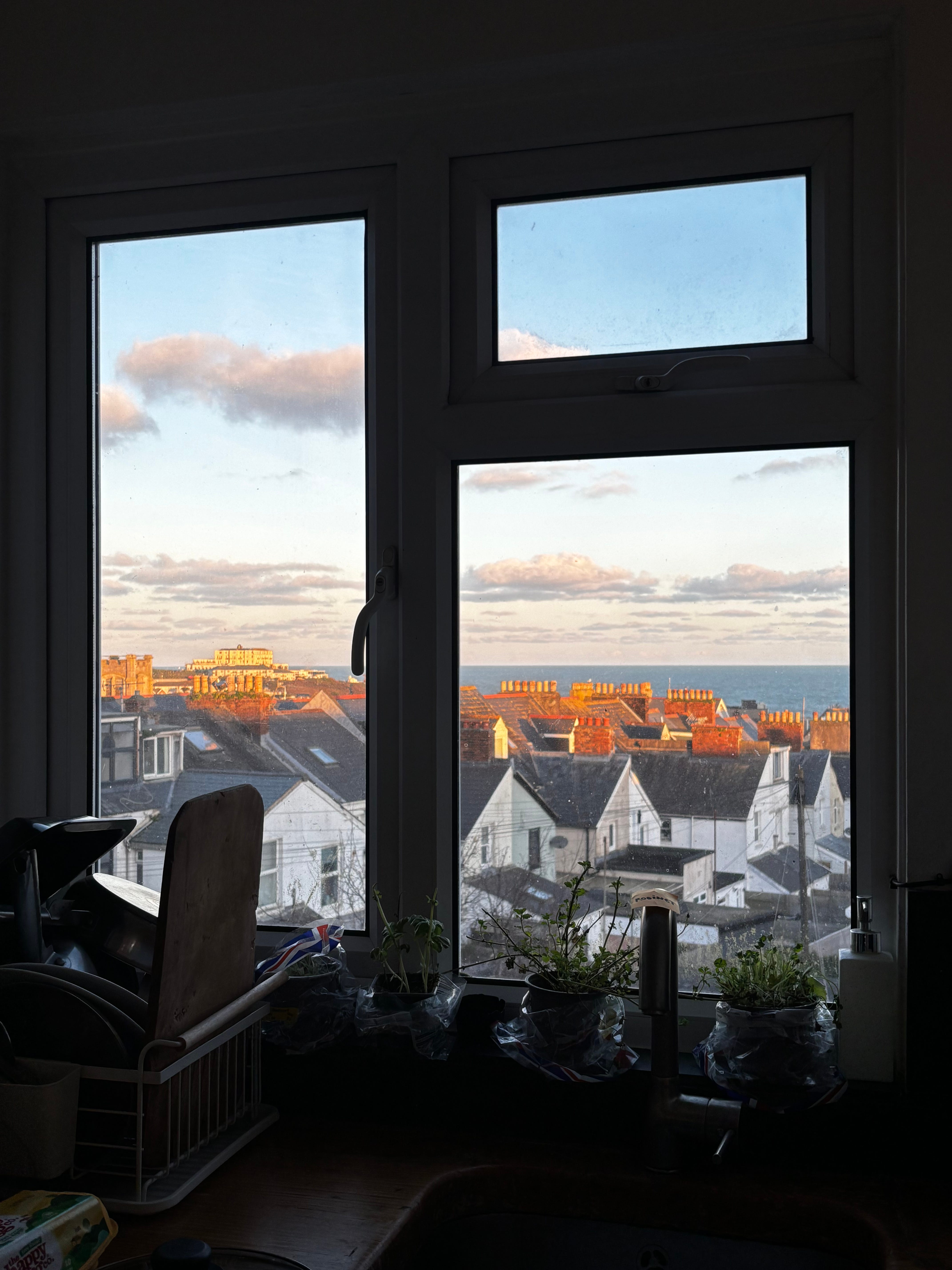
After years of pondering, I left the toxic job, gained time and space for reflection and awareness, finished a book manuscript using a typewriter, packed all my stuff and moved to somewhere near the ocean. It was a complete identity reset.
I feel this was only possible because I’m being financially supported. It was the only way out I found for my own ego-driven happiness.
And I think we don’t talk about this enough when we talk about habits, routine, and slow life.
We inspire each other to make changes that allow us to feel good and comfortable in our bodies, being in Sao Paulo, Hong Kong or Erechim (my hometown <3) with whatever tools in our hands. As I said, I believe in metamorphosis and that there is room for manoueveur. The less we consume, the more we say no to a system that is eating Planet Earth, our Pacha Mamita.
But unless we live off-grid in a cave, we can’t just pretend that slow living isn’t also a commodification, that everyone have the time and space to get out of the rat race and make conscious choices. As if these depend only on psychological inner traits. There are so many layers to how we end up making choices and so much affecting them, being these social, economical, historical, even spiritual.
For me, this perspective opens up compassion.
So now, with this consciousness-expanded moment, let me share my new nourishing routine as a writer.
Eating
The first thing I became obsessed when I finally had an ocean view was to eat more colourful and with intention. I worked with a nutritionist when I was 20 years old and lost 30 kilograms (yes, amigos). Then I studied in my master’s the influence of the American way of life on Brazilian food system, teaching about this in community schools. So I would say I have a good baseline.


I know healthy eating looks different for each one of us, for me the best advice is what journalist Michael Pollan says in one of his books: think how your grandmother used to prepare her meals in her 20s or 30s. If you want ice cream, great, is it possible to make some at home?
I also read labels and actually see where the food I’m eating comes from. Usually, the longer the ingredients list is, the worse (mind the gap: a lot of vegan treats that are considered healthy have a long, long, list of ultra-processed oils, for example). I prefer to always follow the rule ‘peel more, unpack less’.
What I was craving with this change was just eating more colourful, making sure I nourished my body fully, always balancing protein, carbs and fat, and never, ever, being afraid of fruits. I also never fast. I just eat plenty and well, according to what my body craves, having fun in the kitchen again.
It has helped me plan in advance, in a very light way. I define 2 to 3 main meals per week, roasting a bunch of vegetables to make all sorts of things, and defining 2 types of breakfast. Then breaking this down in a big shopping list.
Happy Virgo-self.
Moving
The second thing I did when I arrived here was buy a new Yoga mat, which is crazy to admit. I have always been very suspicious of yoga: mostly the ‘healthy zen culture’. But I have to say that I’m feeling the call to be more in my body and yoga has been great for that.
I don’t think I would have been able to practice four years ago when I was running up and down my day trying to be a successful producer in London barely breathing. I had my yoga moments (during COVID I learned to handstand because I’m stubborn) but mostly I found it boring.
Now, I’m finding yoga really great to set a grounding presence. The aim is to be in the body so I can write and create from the body instead of just the mind. To feel the body while writing.
I’m doing a 20-minutes practice in the morning and before going to bed, and sometimes a longer 45-minutes practice. Not every day, as I also lift weights. After two weeks, I can feel my posture better and stronger at the gym.
Next on the list is surfing, more about it soon.
Bed hygiene
I’ve always been an early sleeper, but usually got myself up until late on screens. I’m really prioritising reading after 8pm, and only using red lights. This is leading to vivid dreams. Reading is very therapeutic.
I don’t do this to wake up at 5am and have a 10-step morning routine. I like to sleep and I sleep if I can. I don’t know why there is this obsession on ‘locking in a productive day’ with a very complicated step by step morning routine.
We need to sleep, let’s just sleep when we want, and perhaps the best morning routine for a healthy life is sleeping enough.
Writing flow
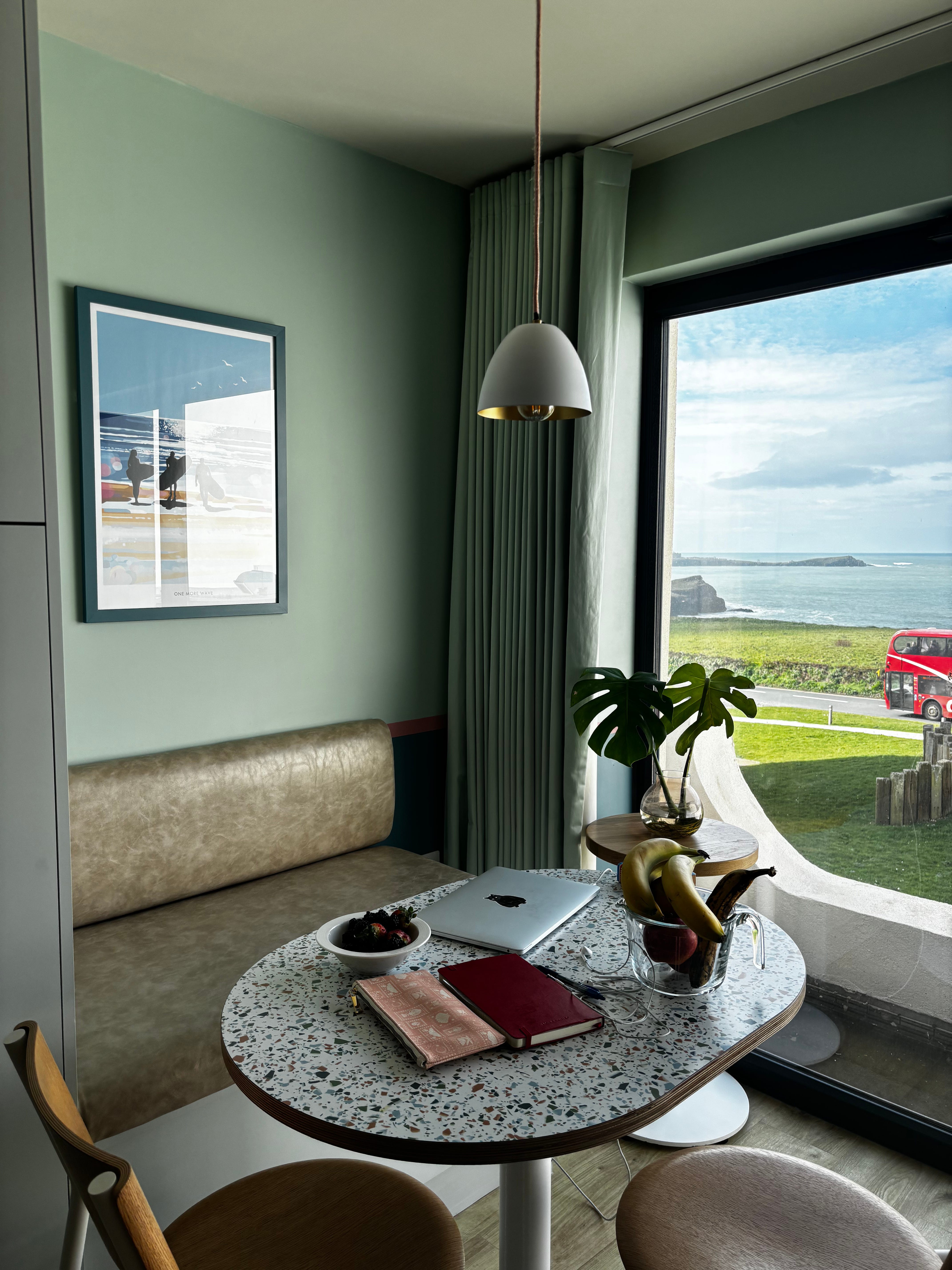
I’m currently devoting my time to writing which means creating some sort of structure to revise a second book manuscript. I guess this new chapter in my life feels like a writing retreat. Therefore, I prioritise 6 to 7 hours of writing per day, mostly 3 times per week, and I try to do it by blocks.
I really write: handwrite, think, polish the words, barely using AI, but yes, using it sometimes for synonyms, or to give me some random ideas for saying a particular sentence, some translation, etc.
The goal is to stay in the flow. This is the first text of this Substack, for example, that I sat and wrote in one go, trying to be as faithful as I could to my way of speaking English. The flow allows the authentic voice to emerge. We just need to follow it.
Writing takes so much time, and I enjoy its artisanal process :)
Some other things I’m enjoying in this new phase
Listening to 432 Hz songs when showering
Limiting social media time (3o minutes per day)
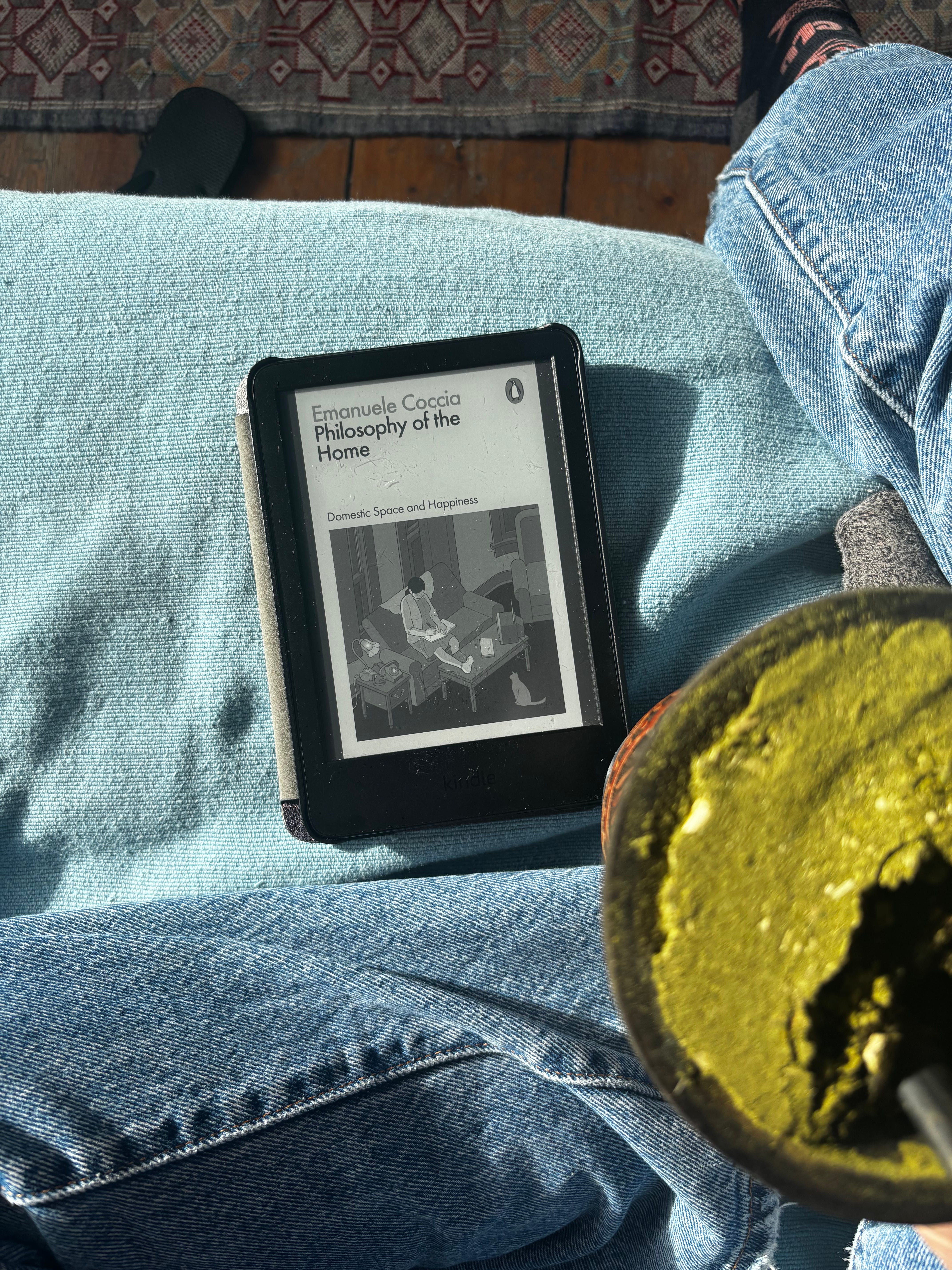
Currently reading a mixture of New Age, Philosophy and Literature: The Philosophy of the Home by Emanuele Coccia, The Years by Anne Ernaux and Frequency by Penney Peirce
Using AI to interpret my dreams through Jungian Psychology
Sitting somewhere nearby the sea and doing nothing (I notice most people tend to do something either take dogs for walk, be on the phone, or walk but few are just sitting. It’s a powerful meditation practice, just sitting).
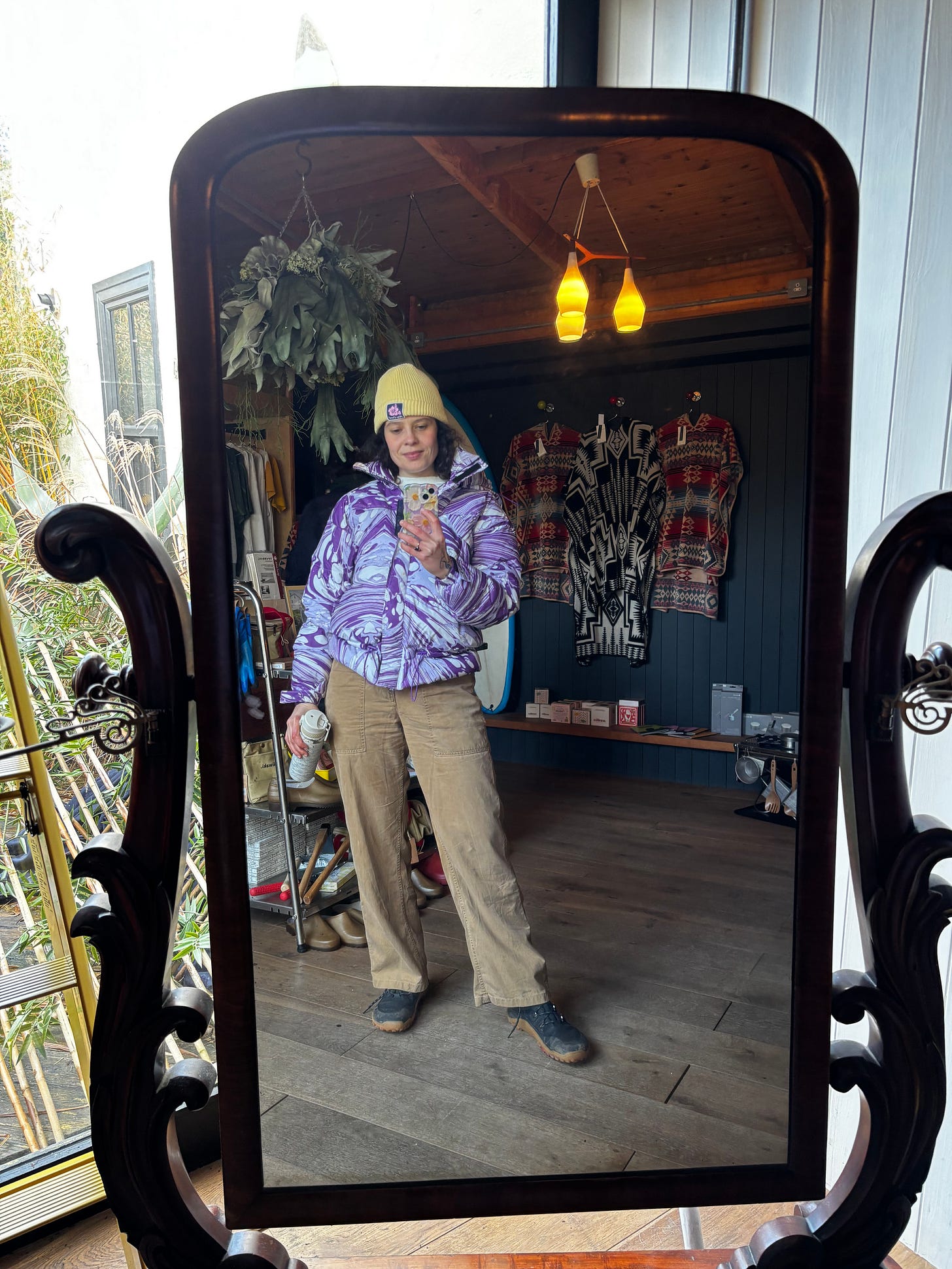
Well, I still can’t afford purchasing homemade-slow-mindful-stuff in cool shops.
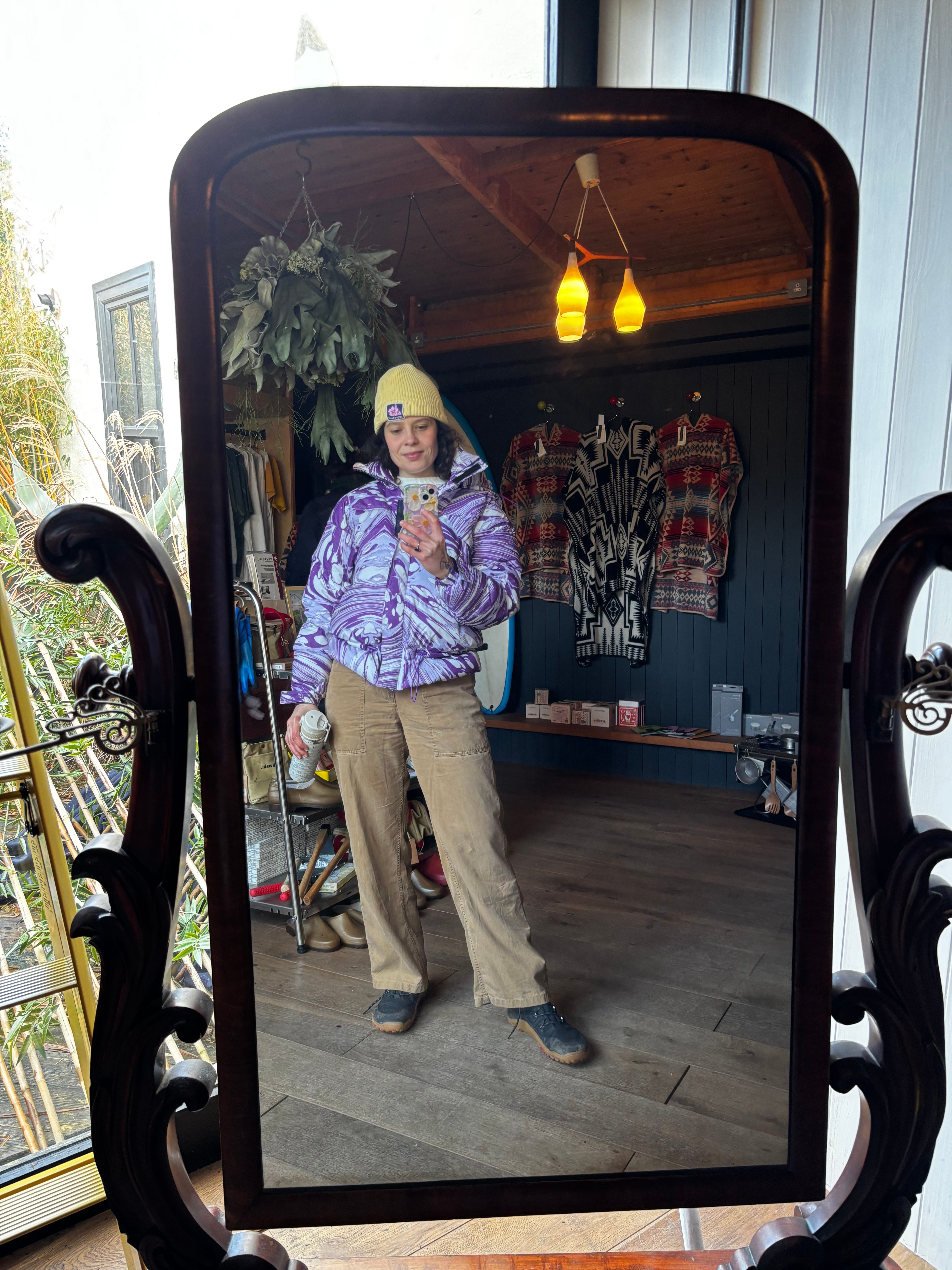
Hope this has inspired you and generated some awareness. I’m still contemplating on the fact: have I just bought me a new lifestyle? We shall see.
A last note: if the stars align in April I’ll be announcing the programme of Alma’s writing & wellbeing offerings for the year. Until then, stay in the flow.
With amor,
Julia